

How to Use Umbrella Rigs: The Alabama Rig Breakdown
Learn how to rig, cast and retrieve umbrella rigs so you can put a school of baitfish in front of bass every single cast.
Best for: Intermediate to Advanced anglers
What you need: Heavy-power casting rod (7'6"+), high-capacity baitcasting reel, 40-65 lb braid, umbrella rig frame (3 or 5 wire), paddle tail swimbaits in 3-5" range
Do this first: Rig a YUMbrella Flash Mob Jr with five 3.5" paddle tail swimbaits in a shad pattern. Cast it toward a main lake point in 8 to 15 feet of water and slow roll it just above the bottom. That single setup catches bass in almost every reservoir in the country.
What Is an Umbrella Rig?
An umbrella rig is a multi-wire frame that holds three to five lures at once. It mimics a small school of baitfish moving through the water column. When bass see it, they do not see five separate lures. They see a pod of shad and they attack.
The design traces back to the saltwater striper world where anglers used multi-lure spreader bars for decades. Paul Elias brought it to bass fishing in 2011 when he won the FLW Tour event on Lake Guntersville using a 5-wire rig loaded with swimbaits. The fishing world called it the Alabama rig and the name stuck.
A central wire frame branches out like an open umbrella. Each arm tip holds a snap swivel where you attach a jighead and soft plastic swimbait. Bass that would ignore a single swimbait will crush the school presentation because it triggers a competitive feeding response.
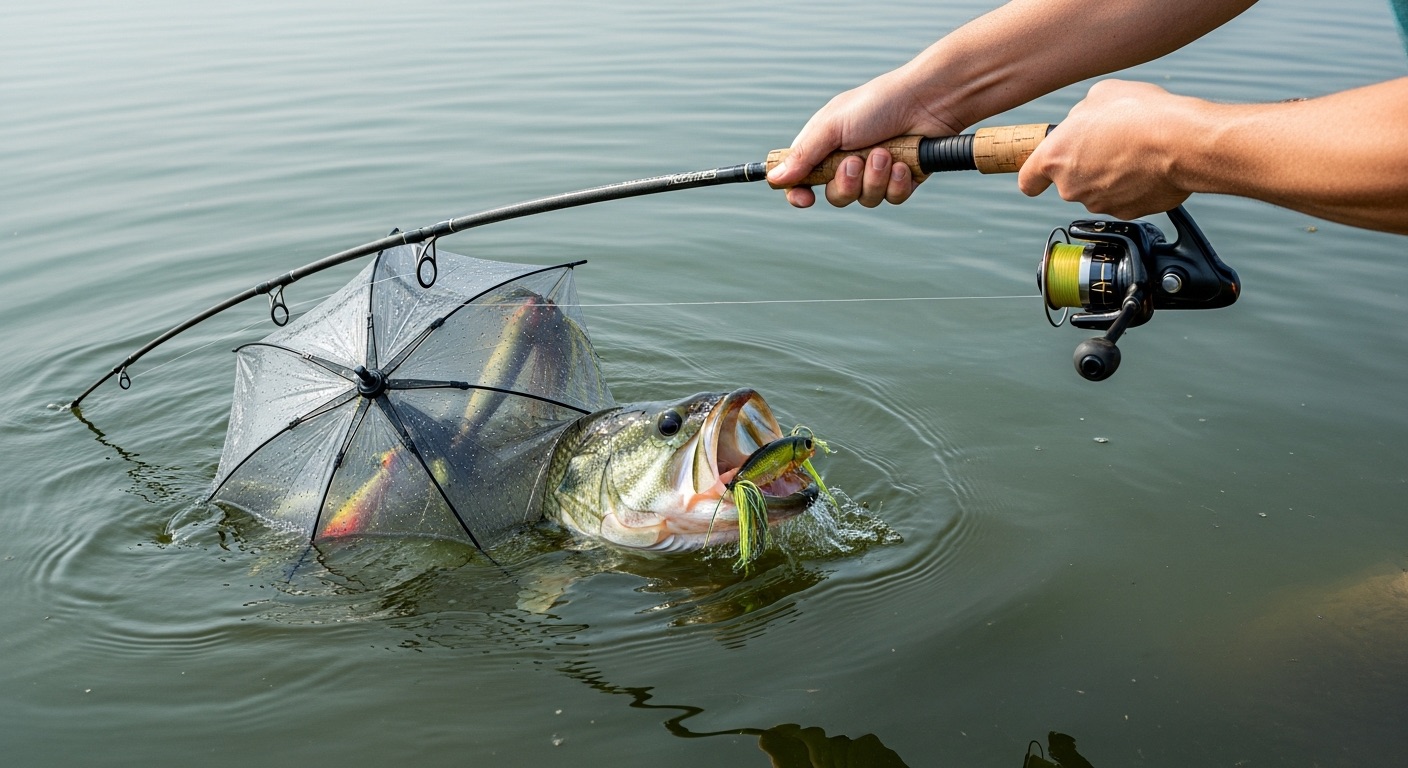 The umbrella rig mimics a school of baitfish. Five swimbaits on a wire frame create a presentation that triggers pack-feeding instincts in bass.
Get Personalized Fishing Advice
Want real-time conditions for your exact location? Tackle provides live tide data, wind forecasts, and AI-powered fishing advice tailored to where you fish.
✓ Real-time tide charts • ✓ Wind & weather forecasts • ✓ AI fish identification
How to Set Up an Umbrella Rig
Setting up an umbrella rig takes more time than tying on a single lure but it pays off.
Choose Your Frame
YUMbrella Flash Mob Jr - The most popular option. Five wires with a compact frame that casts well. Lighter than the original and easier to fish all day. Retails around $8-10.
Picasso School-E-Rig - Premium titanium wire that springs back into shape after hitting cover. The bait keeper system holds swimbaits securely. Runs $12-18.
Hog Farmer Baits Umbrella Rig - Built heavy for big water. Popular with striped bass anglers who need a rig that handles current and larger swimbaits. Priced around $15-20.
For largemouth bass in reservoirs, start with the YUMbrella Flash Mob Jr.
Select Your Swimbaits
Stick with paddle tail swimbaits in the 3 to 5 inch range. You want baits that produce a strong thumping action at slow speeds because you will not be burning this rig.
Top picks:
- Keitech Swing Impact FAT 3.8" - Heavy salt content for natural action
- Strike King Rage Swimmer 3.75" - Aggressive tail kick
- Zoom Swimmer 3.5" - Budget-friendly and effective
Color should match the primary forage in your lake. Shad patterns (white, silver, pearl) cover 80% of situations. Use bluegill patterns (green pumpkin, sunfish) when bass are feeding on panfish.
Rig the Jigheads
Use 1/8 to 1/4 oz ball head jigs on each arm. Lighter heads for shallower water. Heavier heads for deeper presentations and current.
Thread each swimbait onto a jighead straight. A crooked bait spins instead of swimming and kills the whole illusion. Check every bait before casting.
Attach to the Frame
Snap each jighead onto the snap swivel at the end of each wire arm. Give each arm a tug to confirm the swivel is closed.
Most anglers put their most visible swimbait on the center wire. Some run a different color on the center bait to create a "wounded straggler" that bass zero in on.
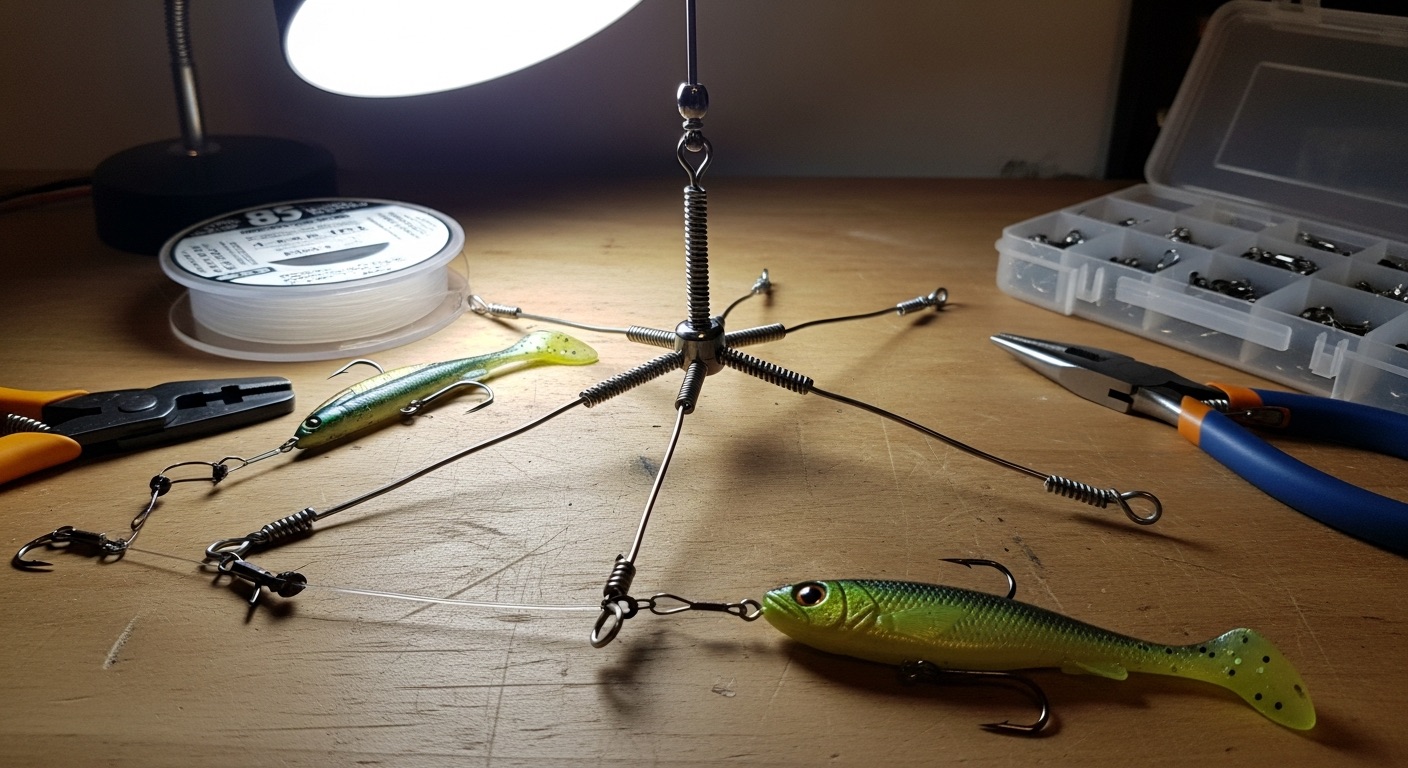 Thread each swimbait perfectly straight on the jighead. One crooked bait will spin and ruin the natural schooling appearance of the entire rig.
Retrieval Techniques for Umbrella Rigs
Slow Roll
The bread and butter retrieve. Cast out and let the rig sink to your target depth. Reel at a steady pace just fast enough to feel the swimbaits working. The rig should stay 1 to 3 feet above the bottom.
This catches the most fish. Period. Bass on structure see what looks like a pod of shad swimming past and they react. Keep your rod tip low and pointed at the rig.
Yo-Yo Retrieve
Let the rig sink to the bottom. Sweep the rod tip up to lift it 3 to 5 feet then let it fall back. Reel up slack and repeat.
This works on steep bluff walls and submerged humps where bass suspend. The falling phase is when most strikes happen so stay ready on the drop.
Burning (Summer Technique)
In warm water when bass chase shad near the surface, speed up your retrieve so the rig runs 2 to 4 feet below the surface. The five swimbaits bulging just under the surface create a wake that draws explosive strikes.
Use lighter jigheads (1/8 oz) for this technique. Works best from late spring through early fall when water temperatures are above 65 degrees.
State Regulations and Legality
Many states restrict or ban multi-lure rigs. You need to know your local rules before you tie one on.
States that limit hooks: Many states cap you at three hooks per line. On a 5-wire rig this means you put hooks on three arms and run hookless "dummy" baits on the other two.
Tournament restrictions: Most major bass tournaments (B.A.S.S. and FLW/MLF) limit you to three hooks per rig. Some state-level circuits ban umbrella rigs entirely.
How to stay legal: Run hooks on the center wire and two outer wires. Use hookless dummy heads on the remaining arms. This keeps you legal in most jurisdictions while maintaining the school effect.
Always check your state wildlife agency website for current regulations. Rules change and this is not a lure you want to guess on.
Best Conditions for Umbrella Rig Fishing
Umbrella rigs shine in specific conditions. Knowing when to pull one out separates anglers who catch fish from those casting a heavy rig all day for nothing.
Water Temperature
The sweet spot is 50 to 70 degrees. That covers late fall through spring in most of the country. In cold water (below 55) slow your retrieve to a crawl. In warmer water (60-70) pick up the pace.
Water Clarity
Stained to moderately clear water is ideal. You do not want gin-clear conditions where bass notice the wire frame. A visibility of 2 to 4 feet is the sweet spot.
Depth
Most umbrella rig fish come from 8 to 20 feet. The rig shines in the mid-depth range where bass school up on structure transitions. Deeper than 25 feet and the rig gets hard to keep in the zone. Shallower than 6 feet and a spinnerbait or single swimbait is a better choice.
Best Structures
- Main lake points - Cast past the point and slow roll through the depth transition
- Channel swings - Where the creek channel bends near the bank. Bass stack up on these in fall and winter
- Submerged humps - Offshore structure that tops out in 8 to 15 feet. Slow roll across the top
- Bridge pilings - Shad congregate near bridge structures. Cast parallel and keep the rig tight to the pilings
- Bluff walls - Yo-yo the rig down the face of steep rock walls
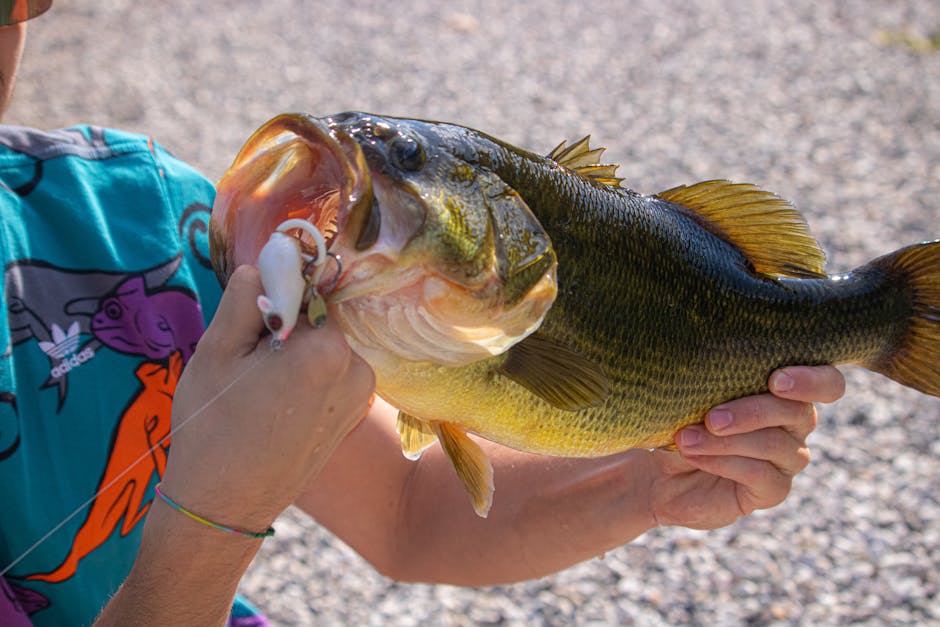 Main lake points and channel swings are prime umbrella rig water. Look for depth transitions between 8 and 20 feet where bass school up on baitfish.
Rod, Reel and Line Requirements
A fully loaded 5-wire rig weighs 2 to 3 ounces. That changes your gear requirements compared to single-lure presentations.
Rod
You need a heavy-power rod rated for 1 to 4 oz lures. Go with 7'6" to 8' for casting distance and hookset power. A moderate action tip loads the rod during the cast without snapping under the weight.
Popular picks include the Dobyns Champion XP 795CB and the Lew's Custom Lite A-Rig rod.
Reel
Look for high line capacity (150+ yards of 50 lb braid) and a 6.3:1 or slower gear ratio. You need torque, not speed. Reels in the 200-300 size range handle the load well.
Line
Main line: 40 to 65 lb braid. Non-negotiable. You need thin diameter for casting distance and zero stretch for hooksets at range.
Leader: 20 lb fluorocarbon (3 to 4 feet) tied with an FG knot or Alberto knot for abrasion resistance and reduced visibility.
Mistakes That Kill the Umbrella Rig Bite
-
Fishing too fast. The number one mistake. Baitfish do not sprint. Slow down until you barely feel the swimbaits working.
-
Using mismatched swimbaits. All five baits should be the same size and style. A school of baitfish is uniform. One oddball bait that swims differently breaks the illusion.
-
Ignoring your electronics. If your graph is not showing baitfish and bass grouped up, you are probably wasting your time. Find the schools first.
-
Casting into heavy cover. The multi-wire frame catches on everything. Fish the rig in relatively open water around structure edges. Save the heavy cover for jigs and Texas rigs.
-
Never changing jighead weight. Wind, current and depth changes all affect how the rig runs. Carry 1/8 and 1/4 oz jigheads and adjust throughout the day to keep the rig in the strike zone.
-
Setting the hook too hard. Reel down and sweep the rod to the side. The weight of the rig helps set the hook. Swing too hard and you rip the bait out of the fish's mouth.
-
Fishing it 12 months a year. They peak when bass are schooled up on shad from fall through early spring. In summer when bass scatter a single presentation is more efficient.
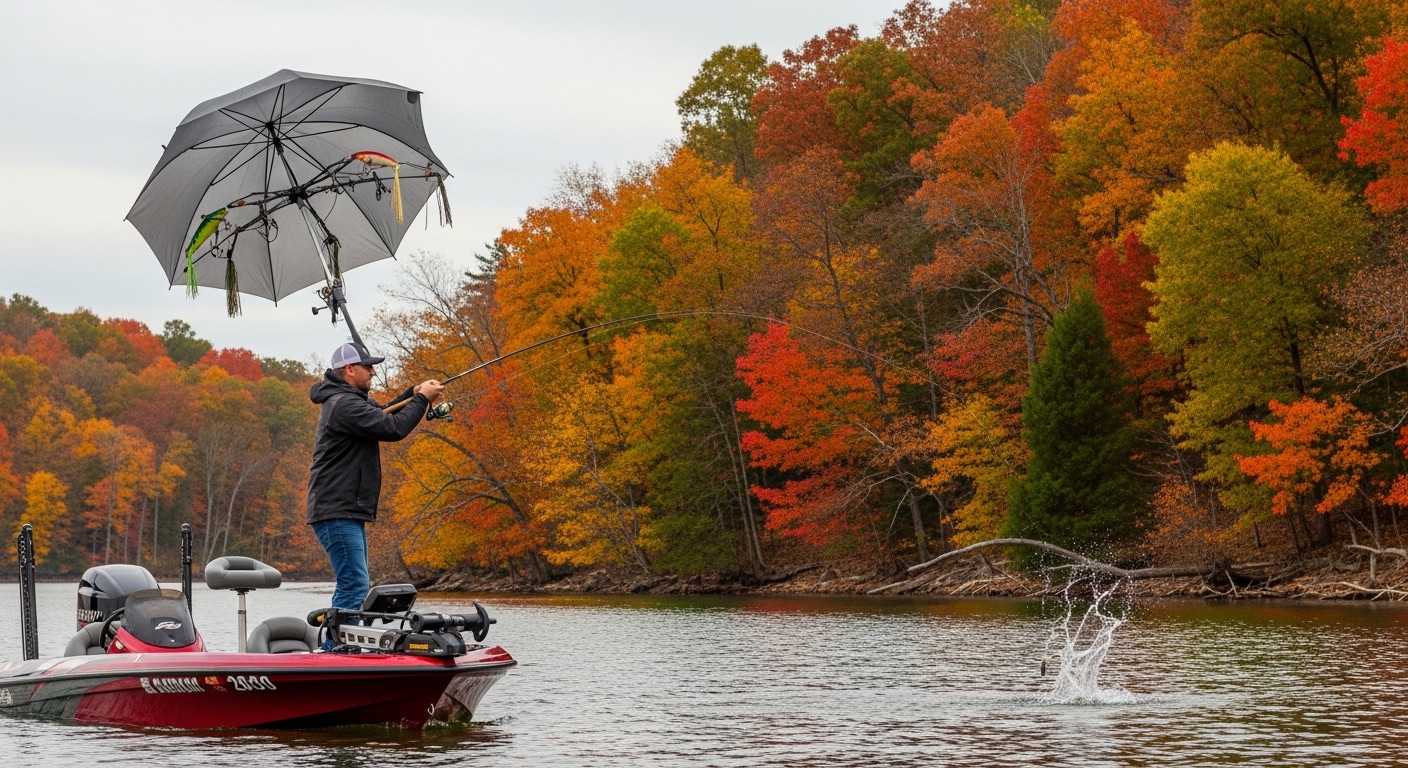 Match all five swimbaits in size and color. A uniform school of baitfish is what triggers the competitive feeding response from bass.
Decision Tree: Adjusting to Conditions
- If water is clear - Downsize to 3" swimbaits in translucent colors (ghost shad, clear silver). Use lighter jigheads to slow the fall rate.
- If water is stained - Go with 4-5" swimbaits in white or chartreuse. Slow roll near the bottom.
- If wind is pushing baitfish - Fish the windblown bank. Shad pile up against wind-blown points and bass follow.
- If bass are marking deep on your graph - Upsize jigheads to 3/8 oz and yo-yo the rig through the school.
- If you are getting short strikes - Switch to larger hooks on your three armed wires. Bass may be hitting the dummy baits.
- If no bites after 20 minutes - Change your depth zone before changing your bait. Move shallower or deeper along the same structure.
Spot Playbook: Where Bass Set Up for Umbrella Rigs
- Main lake points with creek channels nearby - Cast past the point and slow roll from deep to shallow.
- Secondary points inside creek arms - Less pressure than main lake spots. Shad funnel between the bank and the channel.
- Submerged road beds and causeways - Hard bottom creates a travel corridor. Run the rig parallel.
- Dam faces and rip rap - Shad stack against dam walls in fall. Parallel casts with a slow roll.
- Suspension zones over open water - Count the rig down to the depth your graph shows bass and slow roll through them.
Track What Works
Umbrella rig fishing is all about patterns. The depth, speed and color combination that works on Tuesday might be wrong by Friday. The Tackle app lets you log each outing with conditions and results so you build a real database instead of guessing every trip.
FAQs
Are umbrella rigs legal in my state?
Regulations vary widely. Many states allow the rig but cap the number of hooks at three per line. Check your state wildlife agency website for current rules. When in doubt, run hooks on only three arms and use hookless dummy baits on the rest.
What is the best umbrella rig for bass?
The YUMbrella Flash Mob Jr is the best all-around option for largemouth and smallmouth bass. It casts well, holds up to repeated use and costs under $10 for the frame. Pair it with 3.8" Keitech Swing Impact FAT swimbaits for a proven combination.
Can I use an umbrella rig from the bank?
You can but it is challenging. The rig is heavy and requires long casts to reach productive structure. A 7'6" or longer heavy rod helps. Target accessible points, rip rap banks and bridge pilings that you can reach from shore.
How fast should I reel an umbrella rig?
Slower than you think. Most anglers reel too fast. You want a steady retrieve just fast enough to feel the swimbaits thumping. Think of a walking pace. The school of baitfish should look like it is cruising, not fleeing.
What is the difference between an umbrella rig and an Alabama rig?
They are the same thing. Alabama rig is the popular nickname that stuck after Paul Elias used one to win a major tournament on Lake Guntersville in Alabama. Umbrella rig is the generic term. A-rig is the shorthand. All three refer to the same multi-wire baitfish imitation frame.
1-Minute Action Plan
- Rig to tie on: YUMbrella Flash Mob Jr with five 3.8" Keitech Swing Impact FAT swimbaits in sexy shad on 1/4 oz ball head jigs (hooks on three, dummy heads on two)
- Two places to try first: A main lake point where the creek channel swings close to the bank and any bridge with visible shad on your electronics
- Retrieve: Slow roll. Steady reel with the rod tip low. Keep the rig 1 to 3 feet above the bottom.
- If no bites in 15 minutes: Change depth. Move to the next point and try the rig 5 feet shallower or deeper than your first attempt.
What to Read Next
- Want to fish single swimbaits for a lighter approach? Our swimbait guide covers paddle tails, glide baits and rigging options.
- Targeting largemouth specifically? Read how to catch largemouth bass for seasonal patterns and structure breakdowns.
- Fishing flash and vibration instead? Learn how to use spinnerbaits for a similar school-imitation approach with a single lure.
- Chasing stripers with multi-lure rigs? Our striped bass guide covers open-water tactics where umbrella rigs dominate.
Sources
- Bass Resource - Alabama Rig Fishing Guide
- Wired2Fish - Umbrella Rig Tips and Techniques
- Bassmaster - A-Rig Tournament History
- In-Fisherman - Multi-Lure Rig Regulations
Regulations change. Always check local rules before fishing.

Tackle Team
The Tackle Fishing Team is a collective of anglers, data scientists, and fishing enthusiasts dedicated to making fishing more accessible and successful for everyone.
View profileSources Consulted
The following sources were consulted in creating this guide:
- Bass Resource - Alabama Rig Fishing Guide – www.bassresource.com (retrieved Mar 2026)
- Wired2Fish - Umbrella Rig Tips and Techniques – www.wired2fish.com (retrieved Mar 2026)
- Bassmaster - A-Rig Tournament History – www.bassmaster.com (retrieved Mar 2026)
- In-Fisherman - Multi-Lure Rig Regulations – www.in-fisherman.com (retrieved Mar 2026)
Note: Information is summarized and explained in our own words. Always verify current regulations with official sources.
Frequently Asked Questions
Are umbrella rigs legal in my state?
Regulations vary widely. Many states allow the rig but cap the number of hooks at three per line. Check your state wildlife agency website for current rules. When in doubt, run hooks on only three arms and use hookless dummy baits on the rest.
What is the best umbrella rig for bass?
The YUMbrella Flash Mob Jr is the best all-around option for largemouth and smallmouth bass. It casts well, holds up to repeated use and costs under $10 for the frame. Pair it with 3.8" Keitech Swing Impact FAT swimbaits for a proven combination.
Can I use an umbrella rig from the bank?
You can but it is challenging. The rig is heavy and requires long casts to reach productive structure. A 7'6" or longer heavy rod helps. Target accessible points, rip rap banks and bridge pilings that you can reach from shore.
How fast should I reel an umbrella rig?
Slower than you think. Most anglers reel too fast. You want a steady retrieve just fast enough to feel the swimbaits thumping. Think of a walking pace. The school of baitfish should look like it is cruising, not fleeing.
What is the difference between an umbrella rig and an Alabama rig?
They are the same thing. Alabama rig is the popular nickname that stuck after Paul Elias used one to win a major tournament on Lake Guntersville in Alabama. Umbrella rig is the generic term. A-rig is the shorthand. All three refer to the same multi-wire baitfish imitation frame.
Never Fish Blind Again
Download Tackle to get real-time tide charts, wind conditions, and personalized fishing advice for your location. Know before you go.
✓ Real-time tide charts • ✓ Wind & weather forecasts • ✓ AI fish identification
See local regulations — Find regulations for your area
Want weekly fishing windows delivered to your inbox?
Get personalized fishing forecasts based on weather, tides, and moon phases.
RELATED CONTENT
KEEP READING


